


Software architectures & middleware
Design, integration and deployment of intelligent Human-Robot Interaction systems.
 I-RIM 2026 Workshop HRI
From Development to Real-World Deployment
A focused workshop on intelligent HRI systems, ROS 2, multimodal interaction, generative AI, software architectures, and the path from research prototypes to deployable robotic applications.
Human-Robot Interaction is becoming a defining challenge for the next generation of intelligent robotic systems. As robots move into healthcare, rehabilitation, public spaces, homes and collaborative workplaces, they must interact naturally, safely and effectively with people.
This workshop places HRI at its core while focusing on the software infrastructures that enable the transition from research prototypes to real-world robotic applications. Particular attention is given to modular, reproducible and maintainable architectures, with ROS 2 as an enabling middleware for interoperability across platforms and application domains.
The workshop also highlights experiences from national and European collaborative research projects, including Horizon Europe initiatives, where shared software frameworks and open-source practices can accelerate technology transfer and collaboration.
Design, integration and deployment of intelligent Human-Robot Interaction systems.
Interoperability, modularity, maintainability and reproducibility across robotic platforms.
Vision, speech, language, gesture, haptics, multimodal sensing and human intention recognition.
Generative AI, foundation models, embodied AI, cognitive reasoning and adaptive robot behavior.
Cognitive architectures for interactive, collaborative and autonomous robotic systems.
Healthcare, rehabilitation, assistive robotics, service robotics and collaborative industry.
Software ecosystems, benchmarking, interoperability and best practices for robotics engineering.
Technology transfer, collaborative projects and scalable, trustworthy real-world HRI systems.
We invite extended abstracts from early-career researchers and project teams. Contributions relevant to the workshop will be presented in a short spotlight session. Accepted I-RIM extended abstracts are included in the digital conference proceedings according to the conference guidelines.
The button below goes to the official I-RIM 3D 2026 EasyChair submission system. The conference's Extended Abstract call currently lists 4 October 2026 as the submission deadline; always verify the official I-RIM page before submitting.
Motivation, workshop objectives and an overview of current challenges in next-generation HRI.
F. Scotto di Luzio (UCBM) · M. Rosa (PAL Robotics)Recent advances in Human-Robot Interaction and real-world robotic systems.
Francesco D'Orazio · PAL RoboticsResearch and deployment perspectives for interactive robotic systems.
George Moustris · Institute of Robotics, Athena Research CenterAdditional invited contribution.
Speaker to be announcedShort presentations of selected contributions.
2–3 minutes eachFrom Research Prototypes to Deployable HRI Systems: Challenges, Opportunities, and Future Directions.
PAL Robotics · Rome, Italy
Academic profile Invited Talk 1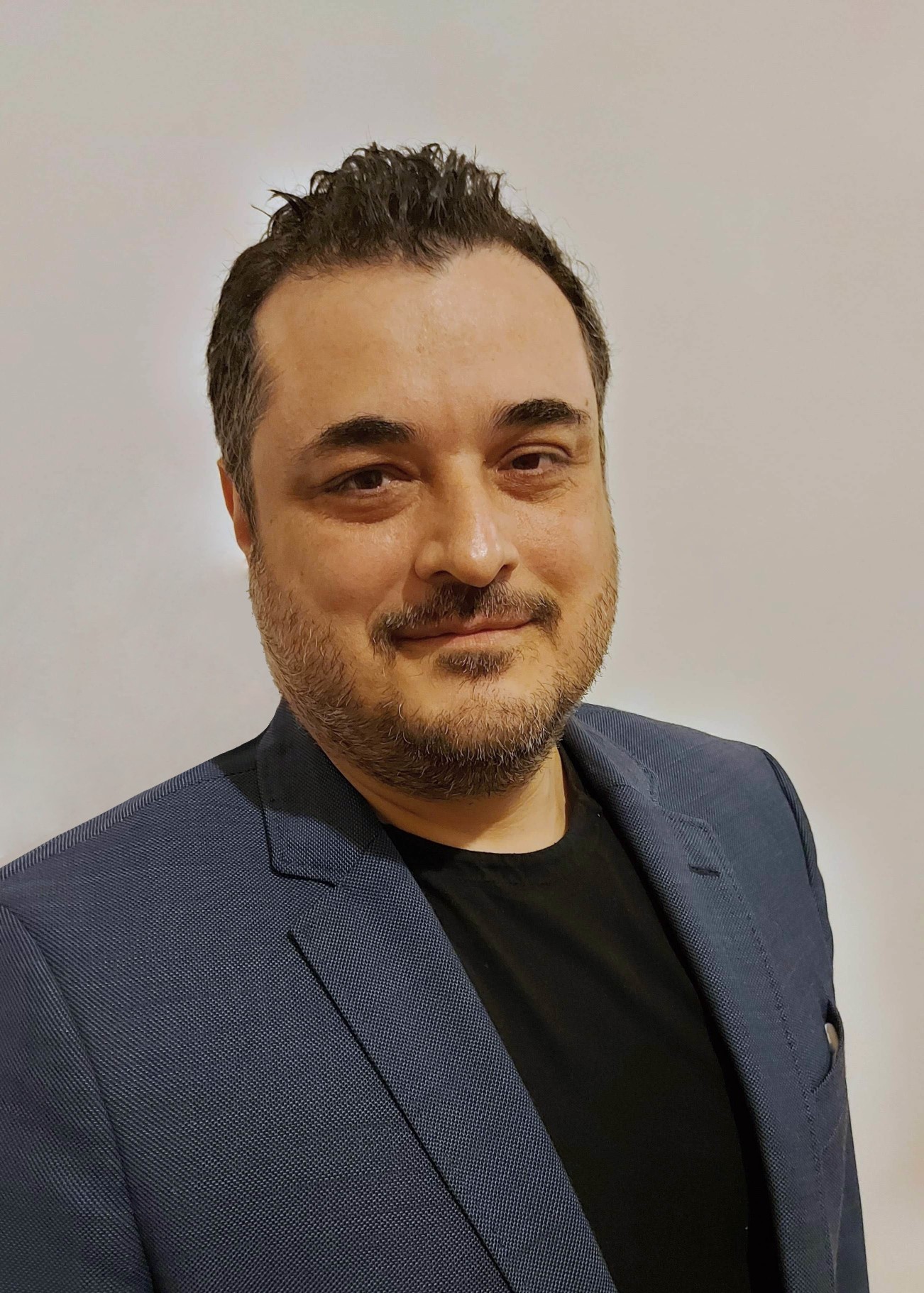
Institute of Robotics, Athena Research Center
Institutional profile Invited Talk 2Invited Speaker
Invited Talk 3A verified institutional headshot for Francesco D'Orazio was not available from a stable public source during this site build. Replace the placeholder with a speaker-approved photo when available.
I-RIM 3D 2026 takes place on 23–25 October 2026 at Gazometro Ostiense in Rome, in synergy with Maker Faire Rome. The workshop is planned for 23 October 2026.
Università Campus Bio-Medico di Roma
f.scottodiluzio@unicampus.itPAL Robotics SL
marco.rosa@pal-robotics.comInstitute of Robotics, Athena Research Center
g.moustris@athenarc.grThe workshop aims to strengthen connections across the robotics community and ongoing national and European initiatives in Human-Robot Interaction and intelligent robotic systems.
Presentation materials, subject to speakers' permission, will be made available through this website. The organizers also plan to build on the workshop discussions toward a Special Session at IEEE/RSJ IROS 2027 in Florence, Italy.